Disclaimer

Notice

The rules of the Bar Council of India do not permit advertisement or solicitation by Advocates in any form or manner. These websites, viz. www.vsmlegal.in and www.vsm.legal, and the contents thereof are merely for informational purposes and not in the nature of solicitation or an advertisement.

Any matter, information or content posted by VSM LEGAL ASSOCIATES LLP [VSM Legal] on this website shall not be construed as legal advice. VSM Legal takes no liability for consequences of any action taken by you relying on the matter, information or content posted on this website.

By entering this website, you confirm and acknowledge that you have voluntarily sought the information relating to and/or posted by VSM Legal and that there has been no solicitation, advertisement or inducement by VSM Legal, its partners or its members.

Leave this site

VSM VSM LEGAL

Criminal Law · Domestic Violence Act

What is the difference between stridhan and dowry?
17/11/2020

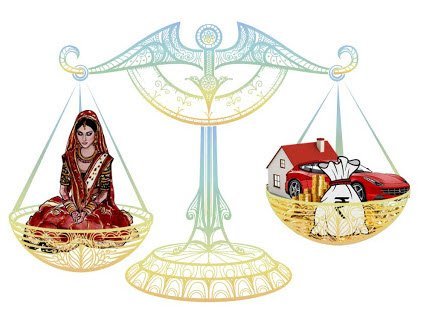
Although ‘Stridhan’ and ‘Dowry’ are entirely different, they are generally misconceived to mean the same. Under Indian law, dowry means any property or valuable security that is given or agreed to be given by the bride’s side to the bridegroom’s family before, after or during the time of marriage. The main difference between ‘dowry’ and ‘Stridhan’ is the element of “demand, undue influence or coercion” that is present in the former but absent in the latter. Stridhan is a gift that is voluntarily given to the women and it is not the result of demand, undue influence or coercion.

This note summarises a reported decision for information only. It is not legal advice and is not a substitute for reading the judgment.